

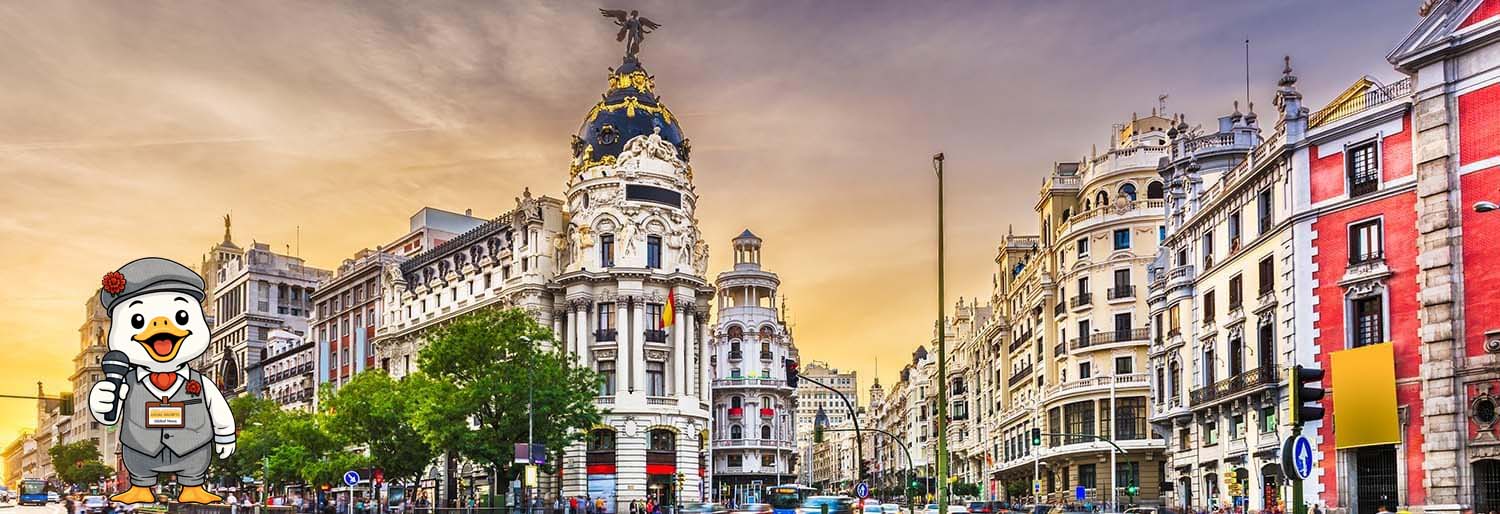
Madrid
Madrid feels confident and lively without being loud, with late meals, long walks, and a social pulse that spills into the streets. Also, the city’s personality mixes old-world pride with a modern, practical rhythm.
The main reason to go is how naturally Madrid turns everyday life into a travel experience, so you leave with a clearer sense of Spain’s capital energy. Because of that, visitors come seeking culture, food, style, and an easy city pace.
Spring and fall, especially April to June and September to October, are often best. Average annual temperature is about 15 Cº / 59 Fº. Tourism is driven by heritage, dining, nightlife, shopping, and events, with many travelers looking for authenticity and good value.
The city in 10 images

Know before you go
Madrid is Spain’s capital, and what makes it special is how walkable, late-night, and local it feels once you learn the rhythm. Also, the city rewards slow mornings and longer evenings.
For weather and mood, April to June and September to October are the easiest picks, however winter is great for indoor culture. One day is a snapshot, 2–3 days fits most trips, and 4+ days work for day trips.
Stay in Centro for first-timers, or Salamanca for a quieter, polished base. Walk a lot, meanwhile the Metro is fast and simple. Lunch is often 2:00–4:00, dinner 9:00–11:00. Budget is mid-range. Tip, watch your pockets in crowded areas and keep bags zipped on the Metro.

Accomodation

We have selected the best accommodation options.
Boutique Hotels, Independent Hotels, Hostels, Guest Houses, Vacation Rentals, Apartments, Villas.
Our selection criteria are based on quality and commitment to local sustainability, as well as companies that share Local Secrets’ vision and values.
Exploring Authentic Madrid


Pre-booked private transfer

Top things to do
In Madrid, priorities change with your travel style. Couples often lean into scenic strolls and long dinners, while families do shorter loops with parks. Solo travelers may focus on culture, and friends often add nightlife.
With 1 day, keep plans in Centro. With 2–3 days, add Retiro and one district, so travel time stays low. A week can include nearby towns. Weather matters, because summer afternoons can be hot, so shift big walks to mornings.
Choose an easy pace, in fact the city is mostly flat but lines can form. Group by Centro, Retiro, and a creative area like Malasaña. Mix free plazas with paid sites, expect $ to $$, sometimes $$$. Plan 60–120 minutes per stop, book top tickets early, and use the Metro when legs fade. If it rains, swap to galleries. Tip, start early, then take a midday break like locals.
Scan Qr Code to Download the App

Must try local flavours.
Start with cocido madrileño, a slow-cooked stew that matches the city’s comfort-food tradition. Try bocadillo de calamares, a simple sandwich loved for its salty crunch, and patatas bravas, fried potatoes with a punchy sauce. For sweet, churros con chocolate is the classic, and tinto de verano is an easy warm-weather drink.
Locals often do breakfast 8:00–10:00, lunch 2:00–4:00, and dinner 9:00–11:00. Look for these in taverns, churrerías, markets, and neighborhood bars. To order, say: “Una ración de bravas, por favor.” Prices are low to mid, with higher costs in tourist-heavy spots.
Common variations include mild or spicy bravas, and cocido served in stages. For veg, ask for pisto or grilled vegetables, and for gluten-free, choose simple tapas and confirm sauces. Pair bravas with a beer or vermouth. Tipping is modest, often rounding up or leaving 5–10% if service is strong.
Authentic, high quality local favourites
In Madrid, high-quality local favourites usually mean cafés, neighborhood bars, small restaurants, bakeries, and markets. A true local favourite is where regulars show up midweek and staff knows the routine without forcing a sales pitch.
Quality signals are simple, a short menu done well, busy tables at normal hours, clean counters, and clear prices. Also, consistency matters more than trendy decor. Order a daily set lunch, a house tortilla, or a specialty coffee and pastry. La Latina suits classic bar culture, while Chamberí feels more residential and calm. Expect $$, with $$$ mostly for fine dining.
Go at lunch for the best value, meanwhile early dinner helps avoid waits. Practical tip, ask what’s “del día,” check closing times, and avoid places with aggressive door staff. For accessibility, look for step-free entry and wider aisles. Credible picks feel local, not staged.
4 Most Popular Itineraries + 2 Secret Spots You Can’t Miss
- Royal Madrid Loop: Puerta del Sol, Plaza Mayor, Royal Palace, Almudena Cathedral, Plaza de Oriente, Gran Vía
- Art and Park Day: Prado Museum, Retiro Park, Crystal Palace, Paseo del Prado, Thyssen area, Cibeles Fountain
- Classic Neighborhood Walk: La Latina, Cava Baja, Mercado de San Miguel, Plaza de la Villa, Opera area, Malasaña
- Night and Views: Gran Vía, Callao, Rooftop viewpoint, Plaza de España, Templo de Debod, Madrid Río
- Secret Spots, Local Nature: El Capricho Park, Quinta de los Molinos, Dehesa de la Villa, Casa de Campo, Lake viewpoint, Principe Pío overlook
- Secret Spots, Hidden Culture: Andén 0 Chamberí, Matadero Madrid, Nave de Motores, Mercado de San Fernando, Tabacalera area, Callejón de los artistas
Festivals and events calendar
- Three Kings Parade (holiday), January 5, annual, one evening across central routes. Free. Arrive early for a good spot. Expect street closures and packed transit.
- ARCOmadrid (art fair), usually late February, annual, several days at IFEMA. Ticketed. Go on a weekday morning. Hotels can rise and traffic increases near the venue.
- Dos de Mayo (regional day), May 2, annual, one day with events often around Malasaña. Mostly free. Go midday. Some roads close and bars get crowded.
- San Isidro Festival (tradition), usually mid-May, annual, about 1–2 weeks, citywide with a strong hub at Pradera de San Isidro. Mostly free. Go early evening. Expect crowds and late nights.
- Madrid Pride (culture), usually late June to early July, annual, about a week, centered in Chueca and nearby streets. Mostly free. Go earlier for easier movement. Lodging prices spike.
- Veranos de la Villa (summer arts), usually July to August, annual, weeks-long across venues. Mixed free and ticketed. Book popular shows early. Heat affects outdoor plans, so check timing.
Recommended shop for authentic, high quality gifts and souvenirs
El Rastro (market), local antiques and crafts. Buy vintage posters, leather goods, ceramics. €–€€, best value under €15 early. La Latina, go before noon for better finds.
Casa Hernanz (espadrilles), traditional footwear made well. Buy espadrilles, woven bags, laces. €€, best value classic pair. Sol area, try on in-store, sizes move fast.
La Violeta (candies), old-school sweets with reputation. Buy violet candies, gift tins, small bags. €–€€, best value mini tin. Gran Vía area, ask for the freshest batch.
Sobrinos de Pérez (hats), classic Spanish hats. Buy flat caps, straw hats, felt hats. €€–€€€, best value simple cap. Centro, go earlier to get help with fitting.
Museo gift shops (curated), quality design and culture items. Buy books, prints, stationery. €€–€€€, best value postcards and small prints. Near major museums, shop after lunch for fewer lines.
Discover the full city guide here


